A dream is a nebulous thing. For starters, what do I mean when I say dream? Do I mean the memories we make while we’re asleep or the things we want when we’re awake? And hey, sometimes they’re the same thing. How does that affect my meaning?
We’re talking about goals and ambitions, intentions, desires. Dreams. Those kinds of dreams.
Dreams are notoriously slippery. You can feel them intensely and still struggle to describe them. You can want something badly and have no idea how to move toward it. They resist measurement. They resist proof. Ask someone how their dream is going and they’ll usually give you feelings, not coordinates.
But what if a dream had coordinates?
What if you could point to a location on a map and say that’s where my dream lives — not metaphorically, but literally? What if your progress wasn’t a feeling but a visible path across terrain? What if the insights you gathered along the way were actual artifacts you could hold, accumulate, trade?
I’ve spent the last 12 months conceiving and building a system that treats dreams exactly this way. Not as abstract aspirations, but as territories with geography, traversable paths, and extractable resources.
It’s called Dreamhold. And the first thing it does is draw you a map.
The Map
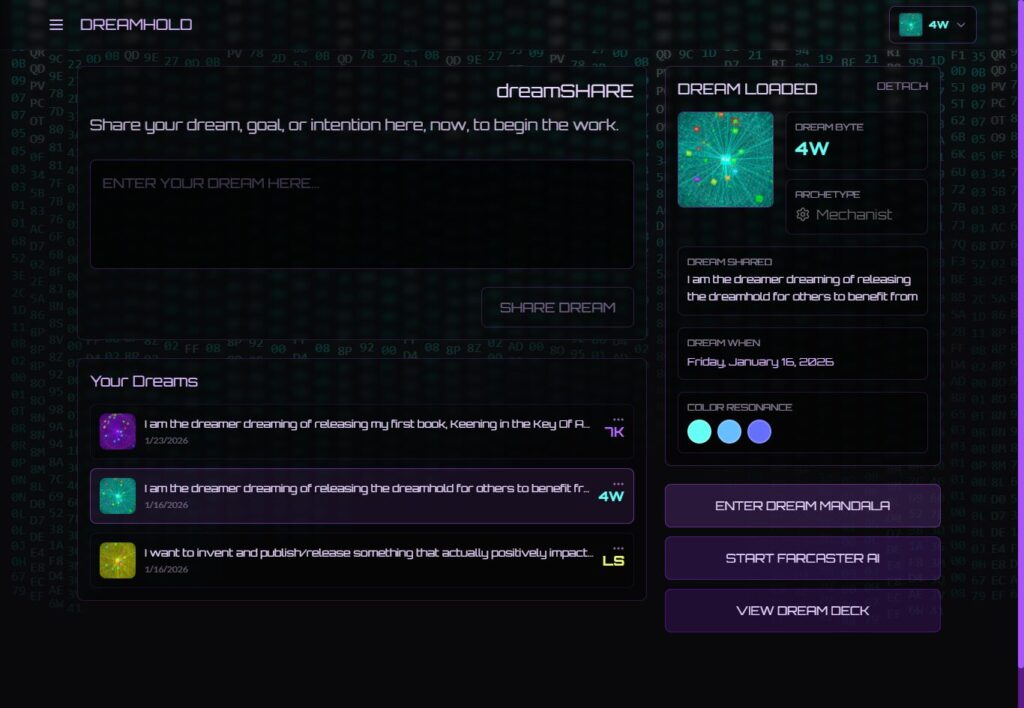
When you enter dreamHOLD, you’re asked to articulate your dream. Not in detail — just the seed. A sentence. Mine was: “I am the dreamer dreaming of releasing the dreamHOLD for others to benefit from.”
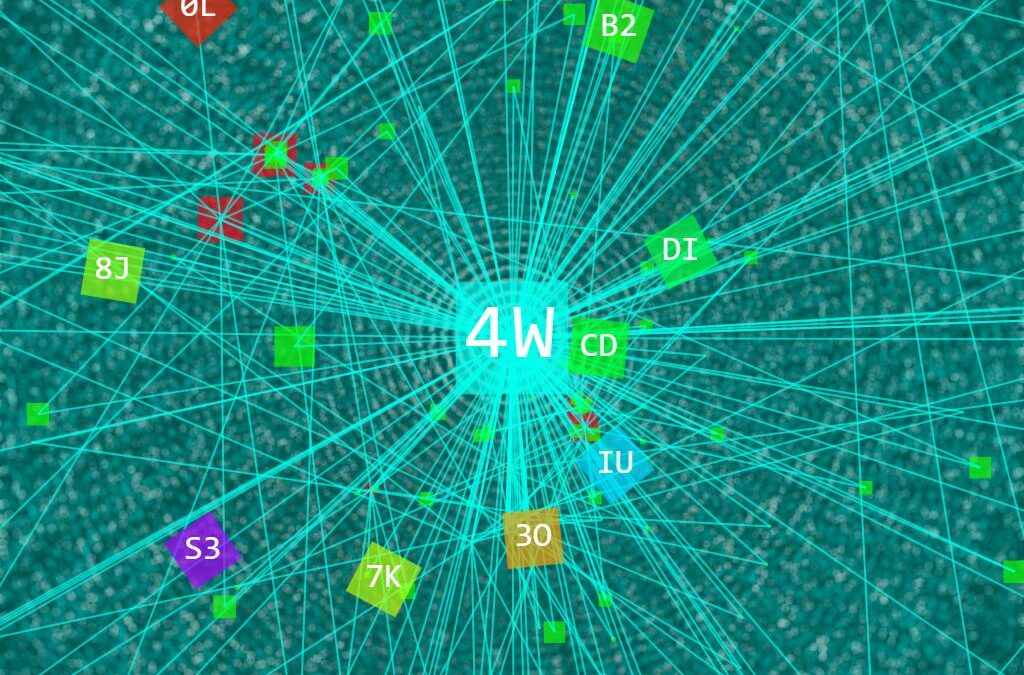
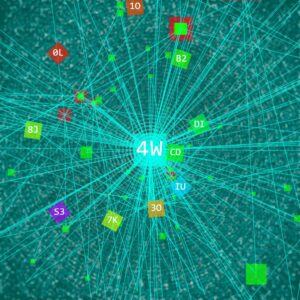
From that seed, the system generates what I call a dreamSCAPE.
Your first instinct is to see this as generative art. A pretty visualization. Vibes.
It’s not. It’s a coordinate system.
Every position on this image corresponds to a location in your dream’s symbolic space. The archetypes live here — Architect, Alchemist, Dreamweaver, Oracle. The prismatic lenses that filter perception — Shadow, Harmonic, Noetic, Echo. Each one has an address. KN means something. 7K means something. You can point to them.
This isn’t metaphor. If I ask “where is the Cowl on your dream’s map?” — you can answer. You can show me.
The dreamSCAPE is the terrain your dream occupies. And terrain can be traversed.
The Traversal
So you have a map. Now what?
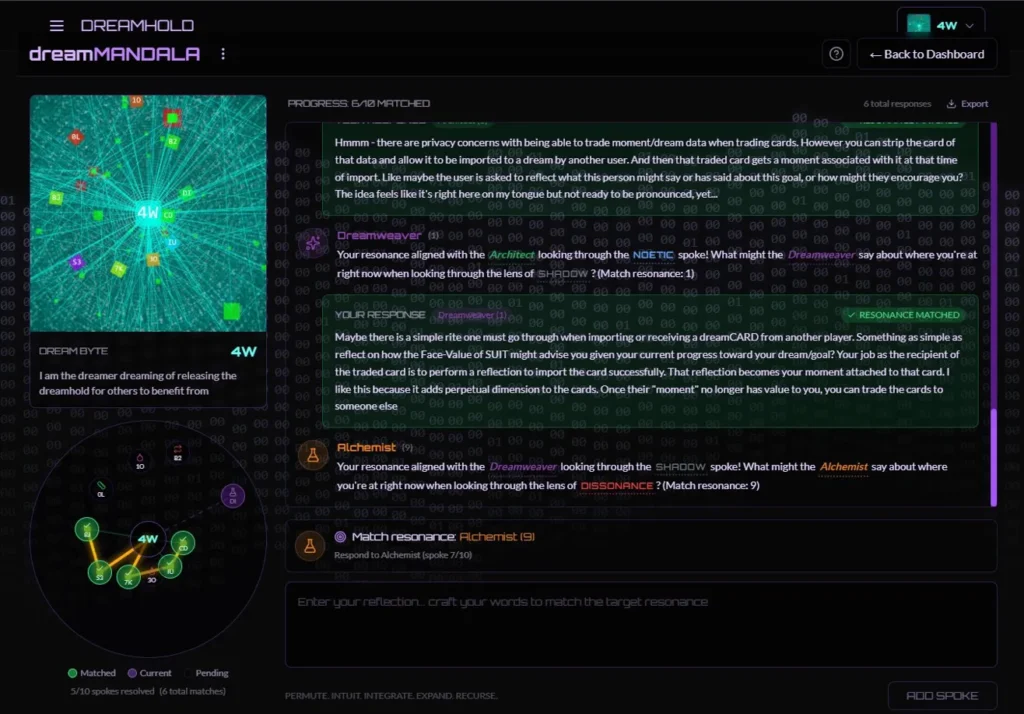
dreamHOLD includes a practice called dreamMANDALA. It’s a guided reflection session where you respond to prompts from different archetypal voices, each filtered through different perceptual lenses. The constraint: your response must match a target resonance — a numerical value derived from the symbolic weight of your words.
It sounds abstract until you do it. Then it becomes a game of reframing, rephrasing, thinking as different versions of yourself until something clicks.
What you might not notice while you’re doing it is that you’re moving.
Each matched response lands you at a coordinate on your dreamSCAPE. Architect through the Harmonic lens. Oracle through the Spectral. Dreamweaver through Shadow. Every exchange is a step.
When the session ends, the system draws what you walked.
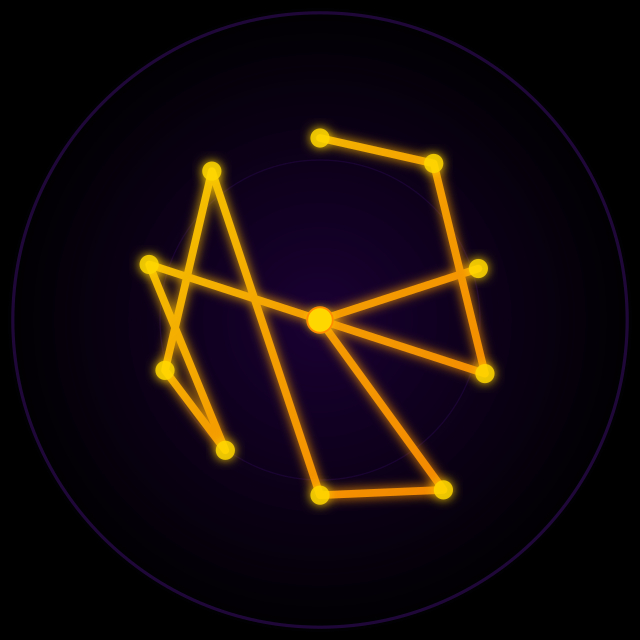
This is a sigil. It’s not decorative. It’s a polyline connecting the coordinates you visited, in the order you visited them. It’s proof of traversal — a literal trace of the path your mind took through your dream’s terrain.
You can look at this and say: I started here. I went there. I ended up here.
That’s not a feeling. That’s a receipt.
The Resources
A map you can traverse is interesting. But terrain without resources is just scenery.
Every dreamMANDALA session generates artifacts. I call them dreamCARDs.
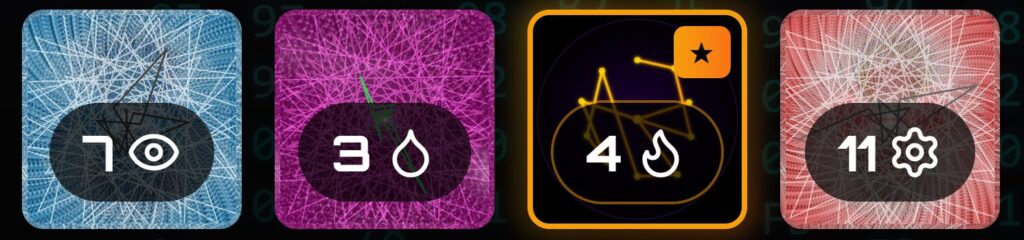
When you complete a session, you’re rewarded with cards based on the spokes you resolved — the archetypal coordinates you successfully reached. Each card carries a face value (1-11) and a suit (one of the eleven archetypes). A 4 of Oracles. A 7 of Architects. An 11 of Weavers.
But here’s what makes them more than collectibles: each card can hold a moment.
A moment is a reflection you wrote during the session — a thought that crystallized while you were inhabiting that archetype. The card doesn’t just represent where you went. It carries what you found there.
Over time, your deck grows. Cards can accumulate multiple moments. Duplicates upgrade rather than clutter. You’re not just collecting — you’re mining. Extracting insights from your dream’s terrain and storing them in portable form.
And these cards aren’t inert records. They’re playable.
The Game
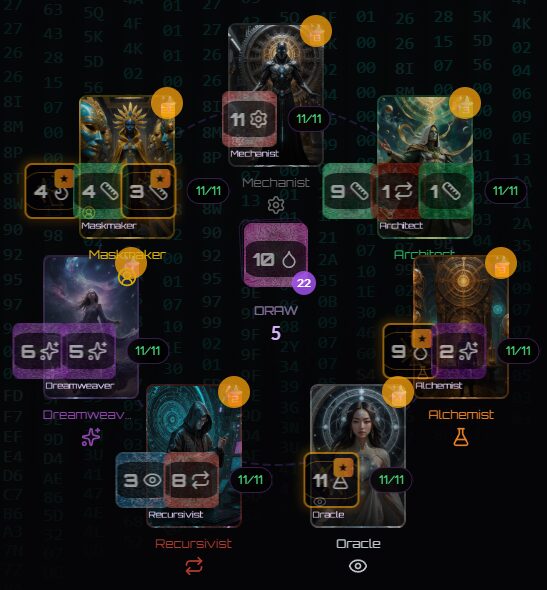
Dreamhold includes a card game called dreamGNOSIS.
You play your deck against the archetypes, trying to achieve “gnosis” — moments of alignment where your cards and the archetypal forces reach equilibrium. The mechanics are simple enough to learn in minutes, deep enough to reward repeated play.
But the real hook happens mid-game.
When you achieve gnosis using a card that carries a moment, the game pauses. The screen shifts. A prompt appears:
“You are the Architect reflecting on this moment…”
Beneath it: your own words from a past session. And an empty space to write what you know now.
Sixty seconds. No pressure to be profound. Just: what’s changed? What’s clearer? What do you know you know?
This is where the cards stop being cards and start being mirrors. You’re not just playing a game — you’re revisiting your own journey through the lens of the archetype that helped you see it in the first place.
The Territory
So what happens when you map a dream?
You discover it has properties you didn’t expect.
Geography — a coordinate system unique to your intention, generated from your seed, addressable and navigable.
Traversability — paths you can walk, tracked and traced, with entry points and exit points that chain across sessions into an accumulating geometry of your journey.
Resources — extractable artifacts that hold value, that accrue meaning over time, that can be played, revisited, and eventually traded.
Labor — the reflective work required to move through the terrain and mine what’s there.
These aren’t metaphors. They’re implemented features. I can show you the map. I can show you the path. I can show you the cards and the moments stored inside them.
And if something has geography, traversability, resources, and requires labor to navigate and extract value from — what do you call that?
You call it a real place.
The Claim
I’m not being cute. This is the thesis:
A dream — a goal, an ambition, an intention held with enough clarity to articulate — is a territory. It has structure. It can be mapped. Progress through it can be measured not in feelings but in distance covered, in coordinates visited, in resources gathered.
The reason dreams feel slippery is because we treat them as abstractions. We journal about them. We visualize them. We affirm them. But we don’t traverse them. We don’t treat momentum as a literal requirement for covering ground.
Dreamhold is my attempt to change that.
It won’t work for everyone. The archetypes I’ve chosen, the lenses, the resonance mechanics — these are scaffolding that emerged from my own cognitive topology. Someone else might need different scaffolding.
But the principle is transferable: if you define the territory, you can map it. If you map it, you can move through it. If you move through it, you can prove you did.
And proof changes everything. Proof is the difference between “I want this” and “I am walking toward this, and here is the trail behind me.”
The Invitation
Dreamhold is still being built. The solo journey works. The social layer — card trading, accountability webs, invite-only onboarding — is future state.
But the maps are real. The sigils are real. The cards are real.
If you want to see what your dream looks like as terrain, I’m looking for early travelers.
What do you know you know?